

Feed the Future: Food Security – District 5060’s 2025/26 Initiative
This Rotary year, District 5060 is uniting around a single, urgent priority: food security. Across British Columbia and Washington State, Rotary clubs are working to ensure that no one in our communities goes hungry—and we want to shine a light on those efforts.
Our goal is twofold:
- Recognize the incredible food-related projects already making a difference across our district.
- Inspire every club to explore new ways to help their local communities feed those in need.
Why Food Security Matters
The reality is stark. On both sides of the border, far too many families struggle to put food on the table.
In the United States
- A family of four earning under $30,000 USD is considered low-income.
- 13.5% of households experience food insecurity.
- People of color, individuals with disabilities, and those living with chronic conditions face significantly higher risk.
In Canada
-
- A family of four earning under $54,600 CAD is considered low-income.
- 22.9% of households in the provinces—and 36.4% in northern territories—experience food insecurity.
- Indigenous peoples, single-parent families, and those with disabilities are disproportionately affected.
The numbers are growing:
- In BC, more than 100,000 people rely on food banks each month.
- In Washington State, that number reaches 1 million. Some areas have seen food bank demand soar by as much as 64%.
Rotary’s Role
Rotary 5060 has a proud history of supporting food security initiatives, from stocking food banks to building community gardens, from hosting meal programs to teaching cooking and budgeting skills. These projects provide not just immediate relief, but also long-term tools for resilience.
Communities across our district are thinking creatively—partnering with local farmers, schools, and service agencies to tackle food insecurity at its roots. Together, we can Feed the Future.


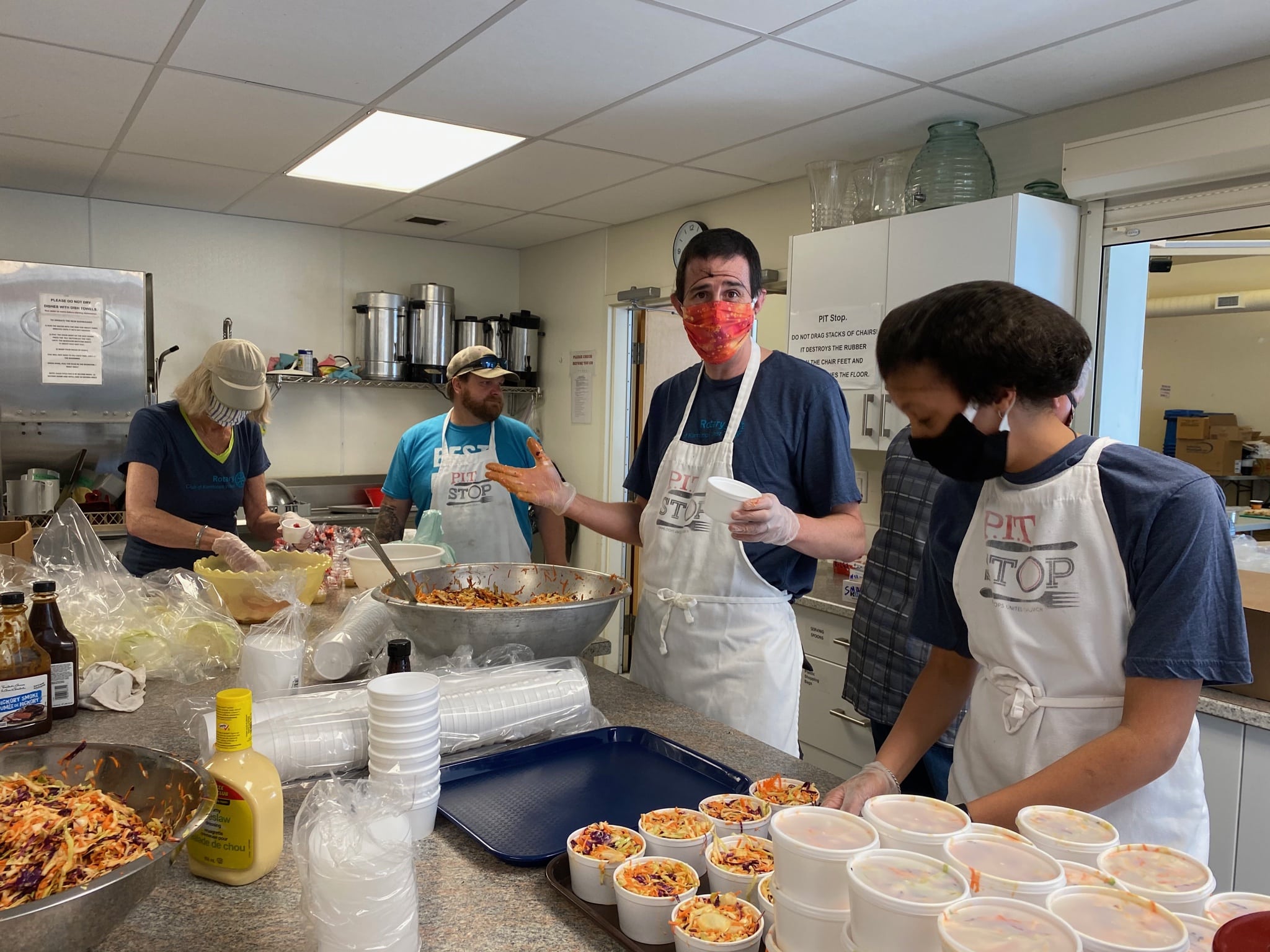
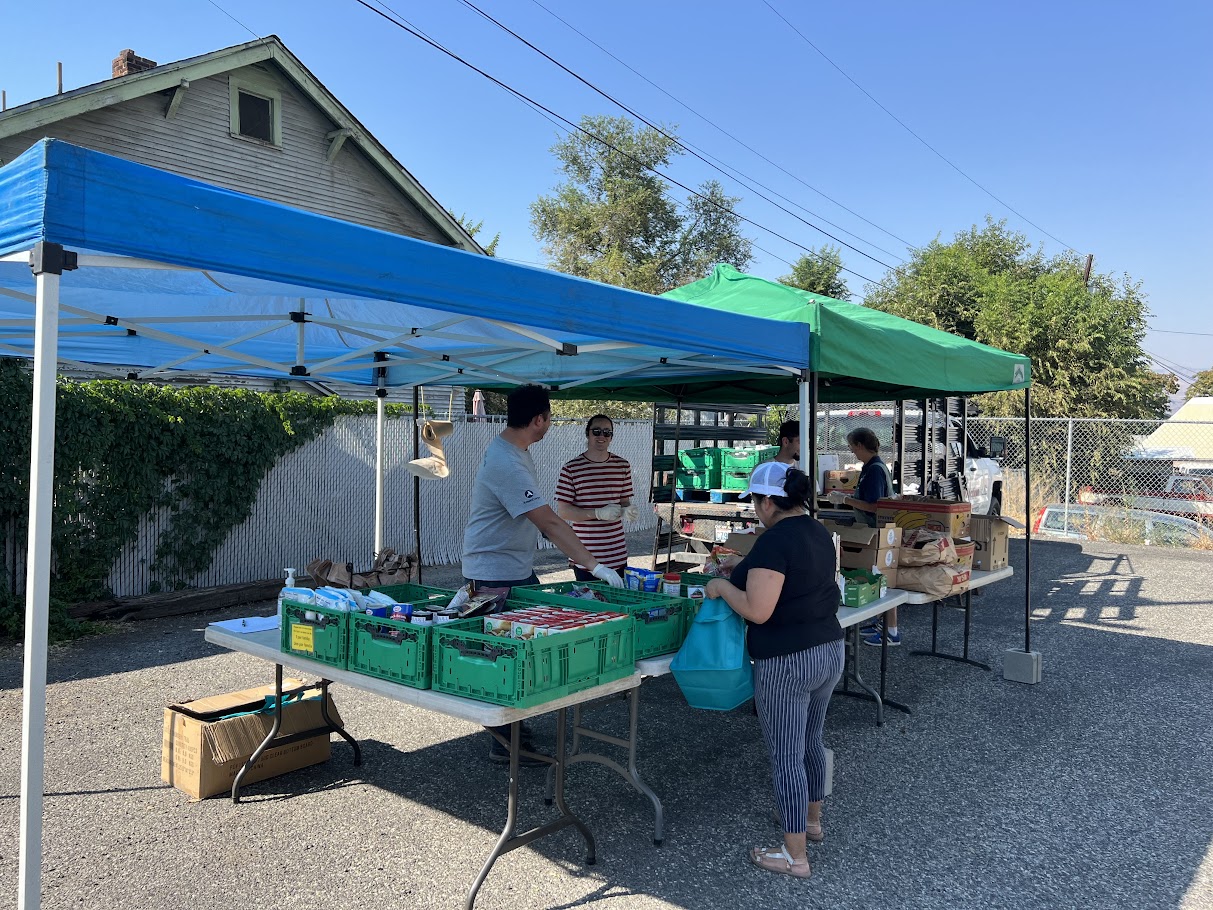


Feed the Future in Action
Okanagan Gleaners
Okanagan Gleaners: Thirty Years of Compassion and Impact
 For over three decades, Okanagan Gleaners has been a beacon of hope for communities worldwide, providing nutritious food to those in need. What began as an inspired idea in 1994 has blossomed into a global movement, driven by the dedication of volunteers and the generosity of local growers.
A Legacy of Giving
Founded by five families from Oliver, BC, who traveled to California and discovered Gleanings for the Hungry, Okanagan Gleaners quickly adapted its mission to address food waste and insecurity. Instead of processing fruit, they saw an overwhelming surplus of vegetables and decided to create dehydrated vegetable mixes—nutritious, long-lasting, and life-saving.
The Power of Volunteers
From day one, volunteers have been the heartbeat of Okanagan Gleaners. Each winter, around 20 dedicated individuals ensure a steady flow of processed food. By spring and summer, that number increases to 50, allowing double the production and greater impact. Thanks to the tireless efforts of volunteers, the organization has reached approximately 60 countries, including Ukraine, Guatemala, Eswatini, South Africa, and Sudan, delivering essential sustenance to communities facing extreme hardship.
Working With Global Partners
Through collaborations with like-minded organizations, Okanagan Gleaners has continuously expanded its reach. Whether supplying specific vegetables for Inuit communities along the Arctic Ocean or supporting relief efforts in conflict-stricken regions, the organization remains committed to adapting and responding to global needs.
Local Support & Sustainability
Sourcing raw ingredients from local farms and backyard gardens strengthens Okanagan Gleaners’ mission. Generous supporters and suppliers, from BC to Alberta and beyond, provide the essential resources needed to maintain operations year-round.
Overcoming Challenges
Running an organization of this scale comes with significant costs—approximately $400,000 annually. Expenses include natural gas, electricity, packaging, and transportation, but thanks to contributions from supporters like Clearway Truck and Car Rentals, Okanagan Gleaners continues to thrive. Volunteers also lend their expertise for equipment maintenance, ensuring the organization operates seamlessly.
A Place for Volunteers
In 2010, Okanagan Gleaners took a major step forward by purchasing four acres of land, enhancing volunteer accommodations. With an RV park equipped with essential amenities, more people can participate in this life-changing work.
How You Can Help
Okanagan Gleaners relies on the generosity of individuals willing to donate time, skills, or financial support. Whether volunteering, contributing supplies, or spreading awareness, every effort helps sustain this mission of compassion and food security.
Okanagan Gleaners’ journey over the past 30 years is a testament to the power of community and the impact of giving. Together, we can continue turning surplus into sustenance and hope into action.
Penticton Sunrise - Christmas in July
Christmas in July – Making a Difference in Our Community
 Last July, Rotary Penticton Sunrise joined forces with the Salvation Army for a special “Christmas in July” initiative. Together, we collected food and cash donations to support families in need during the summer months when demand is still high, but giving often slows down.
This year, we are excited to continue our partnership with the Salvation Army. Plans are underway to support their Thanksgiving Food Drive, helping ensure that local families can enjoy a warm and plentiful holiday meal.
Christmas in July is just one of the ways Penticton Sunrise supports food security in our community. Each November and December, we also participate in Penticton Provides & 10,000 Tonight, a much-loved tradition in partnership with local high schools. For the past five years, students and Rotarians have worked side by side to collect food, toys, and clothing for those in need. On one amazing evening, 10,000 cans of food are gathered by the students through community-wide donations. Sunrise Rotarians proudly lend their support to this effort, helping deliver thousands of items that brighten the holiday season for many families.
At Rotary Penticton Sunrise, we are committed to building a stronger, more caring community — one project at a time.

Organic Gardening - Upper Kittitas County
Rotary Garden Grows Community – and Veggies
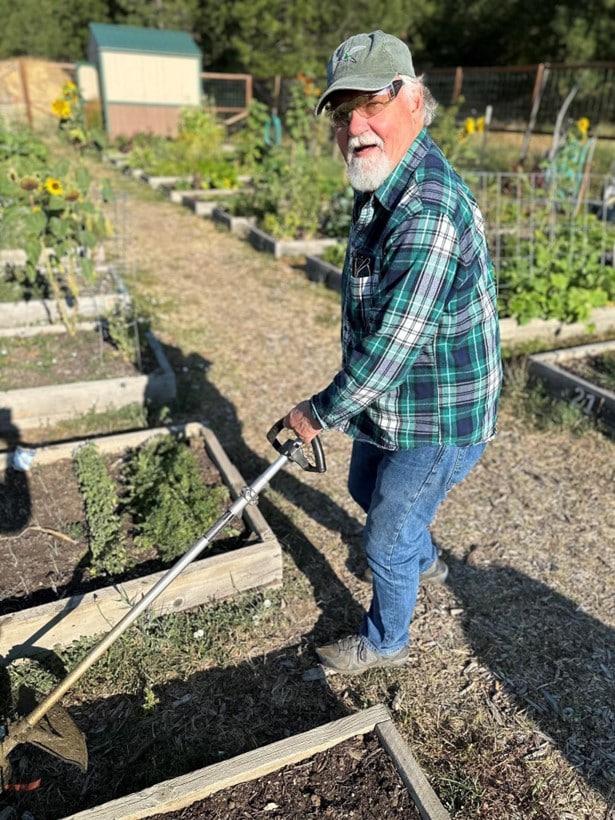 What started as a seed planted by the Rotary Club of Upper Kittitas County some twelve years ago has sprouted into a flourishing garden with flowers, vegetables, and much goodwill.
The garden idea took root when the club heard a presentation from HopeSource about the advantage of fresh, organic vegetables for children with special needs. Back in 2012, with the approval of the City of Cle Elum, Rotarians Mark Kirkpatrick, Eric Terril and Gary Bernt joined forces with Jeff Schafer from Merle Inc to design and build the 3 foot by 12 foot raised beds for garden phase one.
Future plans included additional space up on the hill behind, with terraced garden spaces.
Kirkpatrick reflected, “I got involved because it seemed like a good Rotary endeavor. As a surveyor, I helped with the planning and layout. I am certainly not a gardener myself, but I saw this as an important community Rotary project.”
As the garden flowered over the years, other Rotarians and Master Gardeners, including Ann Risvold, dug deep to make improvements and increase the available bed space.
Green Garden
Currently the flower, vegetable and herb garden covers about 9,000 square feet inside of a deer-proof fenced area behind the Senior Center and Centennial Park; in addition to the land, the city provides the water for the season from May 1st to October 31st.
There are a total of 41 garden beds available at $30 per season, with $15 for each additional bed. There are numerous garden renters, including several Rotarians, as well as beds set aside to provide fresh vegetables for HopeSource and the Senior Center.
The garden includes a passive composing area which turns spoils into soils for the following season. Armed with a grant from Puget Sound Energy, the garden recently “went green” with a solar charging station, electric mower and battery-operated weed-eater.
 Bee Happy
Rotarian Todd Myers added another green dimension to the garden this year with a new hive of 50,000 honeybees to pollinate plants and produce honey.
“This is their first year, but the bees have been very happy, and the hive has been growing healthily. Provided they survive the winter in hibernation, I would expect a great deal of honey starting next year,” said Myers.
The beekeeper shared how interesting bees can bee; he encourages visitors to watch the bees drink at the garden birdbath and come and go from their bee condo. Honeybees won’t bee aggressive so long as they are not harassed or disturbed- they just like to bee happy.
Gardener First, Rotarian Second
While most people first join Rotary and then get involved in community projects, for former Seattleite and retired cancer statistician John Crowley, it was the garden first.
After years of enjoying the Cle Elum area with a vacation home, he and his wife, Cay, moved over full-time in 2018. Cay is a retired child psychologist who volunteers with the mental health support groups at The Shop Teen Center in town.
“I joined Rotary about four years ago because I had heard about the Rotary Garden, and I wanted to be a part of it. I have always gardened, and although not very good at it, I really enjoy it. It is good for the soul,” said Crowley.
He currently chairs the community garden and can often be found there assigning beds, doing maintenance, and denying weeds.
“I see the garden as a basic resource for people in our community. The beds are a bargain, and the gardeners all look out for each other and help each other. The garden has become a community in itself.”
So, in addition to a green thumb, gardeners enjoy the camaraderie, and the occasional garden party complete with roasted vegetables.
 Good for the Soul
The Rotary Garden is a special space for people in the community to grow their own food, flowers, and herbs. It has attracted gardeners who live in condos and other properties without good growing space.
The other appeal is the fully fenced garden to thwart the ever-present marauding bands of deer which are the bane of gardens, flowers, and plants whether you live in or outside of town. Hey- don’t eat that- shoo deer!!!
When it comes to feeding the soul, Rotarian and Senior Center Director Lori Nevin noted their diners recently enjoyed soup and salads made from the romaine lettuce, kale, oregano, mint, sage and lemon cucumbers harvested straight out of the garden.
There are even a few small beds of herbs where visitors are welcome to take a pinch of fresh spice home for cooking.
And as they say- we come from the earth; we return to the earth. In between, we garden.
Starfish BackPacks - Penticton Club
Helping Students Thrive with the Starfish BackPack Program
 The Rotary Club of Penticton is proud to support local students and families through the Starfish BackPack program. Each week, the program provides backpacks filled with nutritious food to students who might otherwise go hungry over the weekend. By ensuring kids return to school on Monday ready to learn, Rotary and our community partners are helping to break down barriers to education and wellbeing.
In addition to the weekly backpacks, the Penticton club also stocks a Starfish Pantry at Penticton Secondary School. This pantry allows students and parents to pick up snacks and food items as needed, ensuring there’s always a little extra support available when times are tough.
The Starfish program is made possible thanks to the generosity of donors and volunteers who believe that no child should go hungry. With every backpack and every pantry shelf filled, the Penticton club is making a real difference in the lives of families in our community.
If you’d like to learn more or support the program, please connect with the Rotary Club of Penticton — together, we can help students thrive.
The Rotary Club of Penticton is proud to support local students and families through the Starfish BackPack program. Each week, the program provides backpacks filled with nutritious food to students who might otherwise go hungry over the weekend. By ensuring kids return to school on Monday ready to learn, Rotary and our community partners are helping to break down barriers to education and wellbeing.
In addition to the weekly backpacks, the Penticton club also stocks a Starfish Pantry at Penticton Secondary School. This pantry allows students and parents to pick up snacks and food items as needed, ensuring there’s always a little extra support available when times are tough.
The Starfish program is made possible thanks to the generosity of donors and volunteers who believe that no child should go hungry. With every backpack and every pantry shelf filled, the Penticton club is making a real difference in the lives of families in our community.
If you’d like to learn more or support the program, please connect with the Rotary Club of Penticton — together, we can help students thrive.
Kamloops Food Drive
Kamloops Rotary Clubs Unite for Food Bank Drive
Twice a year, the four Rotary clubs of Kamloops team up to support the Kamloops Food Bank through a large-scale community food drive. In the weeks leading up to the event, the Food Bank distributes and advertises special bags for residents to fill with non-perishable food items.
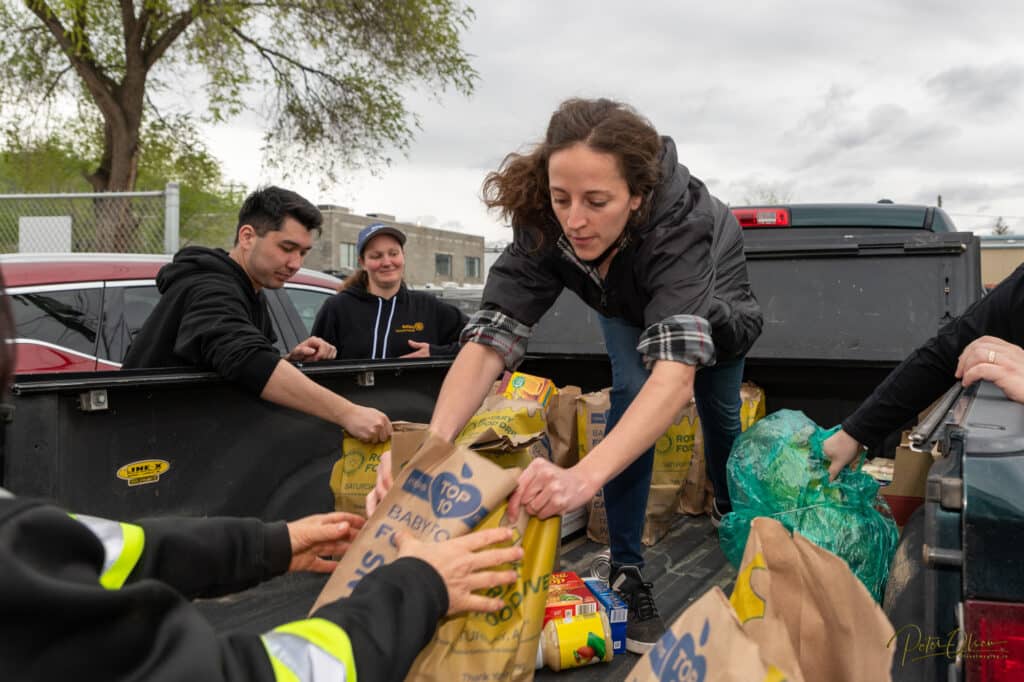
On the Saturday morning of the drive, Rotarians spread out across the city to pick up the donated bags left on doorsteps. Carloads of food are then delivered directly to the Food Bank, where the donations are received and sorted for families in need.
In 2024, the Food Drive gathered 100,000 pounds of food. This long-standing tradition is a powerful example of Rotary service in action. By working together, Kamloops Rotarians help ensure shelves are stocked and our community is cared for.


Chelan Green Bag Program
Nourishing Our Communities: How CDCAC’s Food Distribution Center Feeds Thousands Each Year
At the Chelan Douglas Community Action Council (CDCAC), we believe no one in our region should go to bed, work, or school hungry. As the lead contractor for the Washington State Department of Agriculture’s Emergency Food Assistance Program (EFAP), the federal Emergency Food Assistance Program (TEFAP), and the Farm 2 Food Pantry program, CDCAC plays a vital role in ensuring food access for thousands of families across Chelan and Douglas Counties.
Last year alone, over two million pounds of dry, canned, fresh, and frozen food were received, stored, inventoried, and distributed—at no cost—to our partner agencies and the people they serve. More than 12,000 residents rely on our ability to deliver quality food that meets nutritional needs and supports healthy communities.
Supporting Local Partners
CDCAC serves as the regional food bank, supplying food to more than 20 food pantries, meal sites, and low-income senior housing facilities throughout the two-county region. With seven Rotary Clubs active in our area, community service and collaboration remain at the heart of what we do.
Taking Food Assistance on the Road
Our Mobile Pantry Program ensures that no one is left behind. Each month, our dedicated staff, AmeriCorps members, and volunteers bring food directly to underserved and under-resourced communities. In 2024 alone, the mobile pantry completed over 40 deliveries to Orondo and Bridgeport and monthly distributions to three senior and low-income housing neighborhoods in Wenatchee, reaching more than 7,000 individuals.
The mobile pantry also partners with other mobile service providers—including the regional library network, Columbia Valley Community Health, and various CDCAC support programs—helping residents access not only food but also other critical community resources.
The Power of a Green Bag
What started in 2014 as a small neighborhood effort has blossomed into one of the community’s most impactful food donation programs—the Wenatchee Green Bag Program.
In its first year, the program collected 485 pounds of food. A decade later, in 2024, the total soared to nearly 21,000 pounds—thanks to more than 250 participating households and 25 local businesses.
Joining the Green Bag Program is an easy, meaningful way to give back:
Three Easy Steps:
- Buy one extra non-perishable item each time you shop.
- Store it in your reusable Green Bag.
- On the second Saturday of odd months, a neighborhood coordinator will pick up your filled bag and leave an empty one in its place.
All collected items go directly to the CDCAC Food Distribution Center, where they are boxed and delivered to local food pantries.
It’s that simple—just share what you would buy for your own family. Your contribution helps diversify and improve the quality of food available to neighbors in need.
Join Us
Food insecurity affects thousands of families in our region—but together, we can change that. Whether you donate food, volunteer your time, or join the Wenatchee Green Bag Program, every act of generosity helps strengthen the community we all share.
Sign up today and help feed the future of Chelan and Douglas Counties.
Kamloops Starfish Backpack
The Starfish Backpack Program began in 2016–2017, when Devon O’Toole, then president of the Rotary Club of Kamloops, brought the idea home after attending PETS training in Seattle. What began as a small pilot with 10 club-sponsored backpacks has now grown into a program that sends more than 275 backpacks home with students every Friday. Local service organizations come together each Friday to pack the backpacks and deliver them to elementary schools throughout our school district.

Kelowna Share a Meal
Feeding the Future Through Community and Compassion
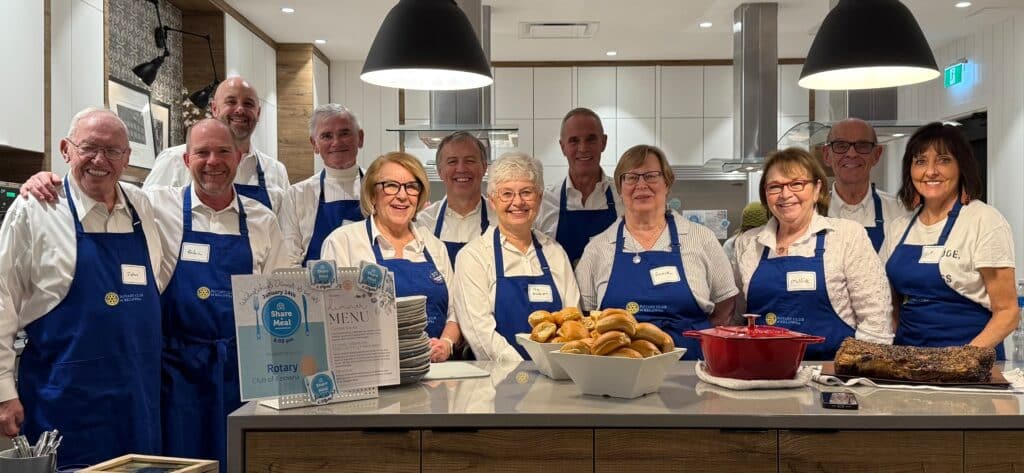
Members of the Rotary Club of Kelowna had the privilege of participating in the Share a Meal Program at JoeAnna’s House—an experience that beautifully reflects this year’s Rotary District theme, Feed the Future.
JoeAnna’s House provides affordable accommodation for families who must travel to Kelowna so their loved ones can receive critical medical care. For many of these families, days are long and emotionally demanding, often spent at the hospital. The Share a Meal Program helps ease that burden by offering a warm, nourishing meal and a sense of care at the end of the day—meeting a basic need while supporting emotional well-being.
Rotarians came together to prepare and serve dinner, creating an evening rooted in connection, dignity, and compassion. While a single meal may seem small, it plays an important role in feeding the future by supporting families during moments of vulnerability, allowing them to focus their energy on healing, hope, and one another. Nourishment, after all, is not only about food—it is about stability, comfort, and community.
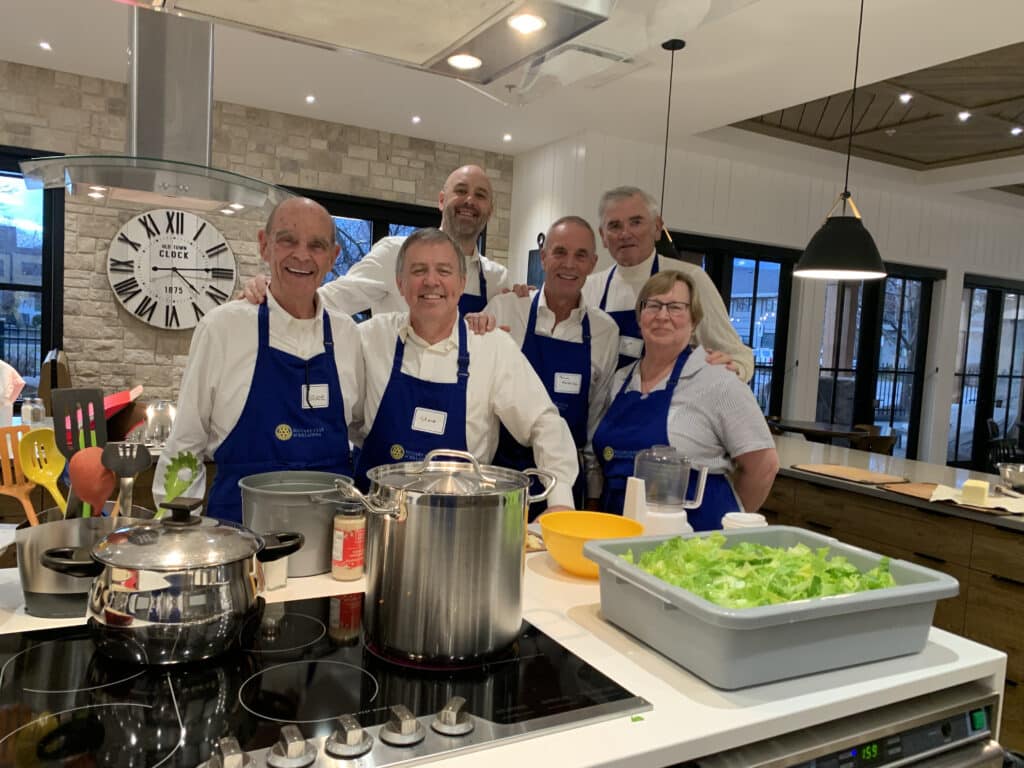
This initiative also highlighted the power of partnership. A sincere thank-you goes to Save-On-Foods, which generously provided a portion of the meal. Their contribution helped ensure families were not only fed but also cared for, reinforcing the collective impact that can be achieved when service organizations and local businesses work together.
For the Rotarians involved, the evening served as a reminder that Feed the Future extends beyond traditional food security initiatives. It includes feeding resilience, feeding hope, and feeding a sense of belonging—especially for those facing challenging circumstances. Through hands-on service, Rotarians witnessed how something as simple as sharing a meal can help sustain families during some of life’s most difficult chapters.
The Rotary Club of Kelowna remains committed to service projects that strengthen our community and uplift those in need. The Share a Meal Program at JoeAnna’s House is a powerful example of Rotary’s ability to respond with empathy, action, and heart—demonstrating that when we feed people today, we help build a stronger tomorrow.
As Rotarians across the district continue to embrace the Feed the Future theme, this experience stands as a reminder that meaningful impact often begins at the table. By showing up, serving together, and sharing in community, Rotarians are helping nourish not only bodies, but futures.
North Okanagan Starfish Program
The Journey of the North Okanagan Starfish Program
The North Okanagan Starfish Program, managed by the dedicated volunteers of the Kalamalka Starfish Society, is on a mission to fight local food insecurity—one child at a time. Every weekend, this inspiring initiative delivers hope and nourishment to 236 elementary school children who otherwise might go hungry, reaching across 21 locations throughout the North Okanagan. Behind every food bag is a team of passionate community members making a real difference.
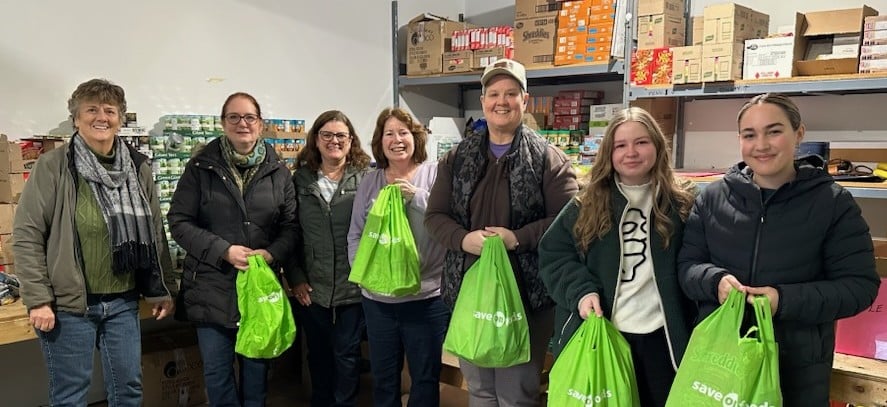
Each week, groups of volunteers fill the bags with nutritious and easy to prepare food. Each bag contains 2 breakfasts, 2 lunches, 2 dinners, snacks, vegetables and fruits.
A Lifeline for Local Children
Food insecurity is a challenge facing too many families in our region. The North Okanagan Starfish Program steps up by providing weekend food bags packed with nutritious meals for children who
rely on school meal programs during the week. These bags don’t just fill stomachs—they lift spirits and help children return to class each Monday ready to learn, grow, and thrive. The smiles and gratitude from the children and their families remind us all how vital this volunteer-driven effort truly is.
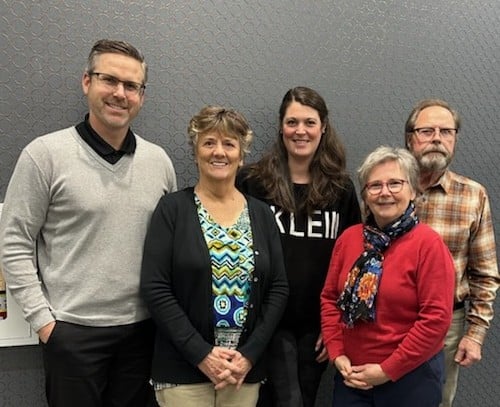
The Starfish Board includes three Rotarians and two former Rotarians. L to R: David Spencer, Mary Jackson, Chelsea Kidd, Brenda Spence, Darryl O’Brian. Missing: Chad Reimer.
What is the History of the Starfish Program in Vernon?
Kalamalka Rotary started the Starfish Pack Program in Vernon in the spring of 2016, as part of a province-wide program. The club started with a pilot program of 20 packs, which was so successful that it led to the program running throughout the following school year. The number of bags each year has increased, especially during COVID. The program is now in its tenth year of operation.
The Kalamalka Starfish Society became a registered charity in June of 2021. The Society meets the requirements for tax-exempt status as a registered charity under the Income Tax Act. As such, the Society can provide tax receipts to its donors
Kalamalka Rotary remains one of the key partners of the program and through an annual golf tournament raises funds for the program. Many Rotarians are volunteers and regularly help to deliver the program. In fact, all of those involved in this program are volunteers – no paid staff!
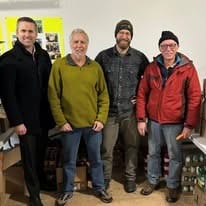
A group of Rotarians unload the pallets and set up the food for packing. L to R: David Spencer, Michael Stamhuis, James Mayne and Roger Perry.
What does the future hold?
Food insecurity continues to be a key need for both students and their families in the North Okanagan. The Starfish Program, now in its 10th year, is continuing to address this need and regularly fundraises to maintain the sustainability of this very needed program.
For further information, visit: www.facebook.com/starfishkalsociety/ or www.starfishpack.com/vernon/.
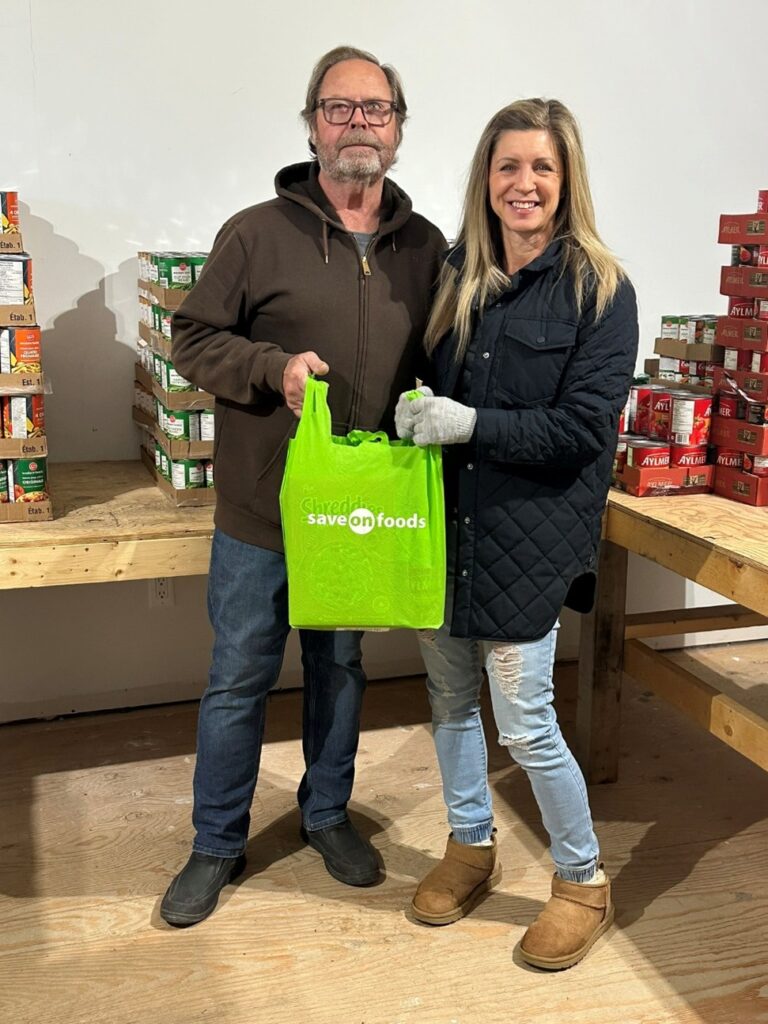
Rotarian Darryl O’Brian and Lead Packer Dianne Lambert
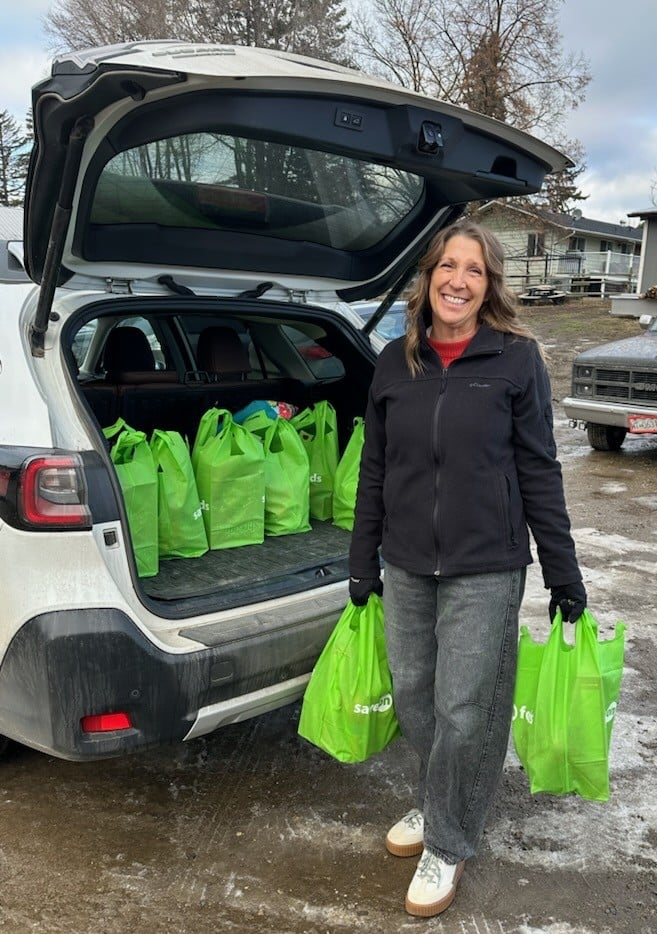
Eight to ten drivers deliver the bags to the 21 locations throughout the North Okanagan each week during the school year.